Sunday, April 14, 2013

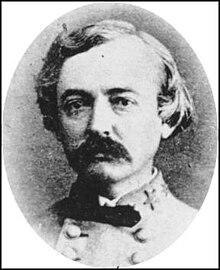
April 14, 1863 (Tuesday): Whiting Torn Between Beauregard and Longstreet

General William H. C. Whiting


HEADQUARTERS,
Wilmington, N. C., April 14, 1863.
Major General D. H. HILL,
Commanding near Washington, N. C.:
    GENERAL: I have just received yours of the 12th,* inclosing a telegram* from Longstreet. I have received so many orders and counter-orders from so many different sources that really I am puzzled how to answer. The War Department has been directing me to re-enforce General Beauregard. The lieutenant-general commanding orders co-operation with you, while from his headquarters at Petersburg I get directions to aid Beauregard if the latter is urgent. Finally, General Beauregard suspends the movements of Evans' brigade. My position is then this: One regiment of Evans' brigade is in Charleston, having got off before the movement was stopped; the general himself is there; I have four here. I do not think the enemy have in the least given up their designs on Charleston. It is incredible that after such monstrous preparations they should give up-+ of that performance of the monitors. Nor am I apprehensive immediately of any demonstration on Wilmington, though such might be attempted. If, as you surmise, any feint should be made by land, your cavalry ought to let Ransom know the moment it is discovered, that he need not wait for me to call upon him. If your estimate of Foster's troops, viz, 8,000, is correct, and as Longstreet says he has received no more re-enforcements, he will neither dare to attack you nor to move on me. I know him too well. Still I must keep on the lookout. I only fear that my armament is not heavy enough to keep a monitor out. For one to get inside wold be a very serious embarrassment; but it will hardly be tried, I think, until the defenses of Charleston are more thoroughly tested; and surely unless they abandon their great expedition altogether before that first repulse they will not divert any portion of their land or naval forces for an attempt on a subordinate position. If I should hear that the fleet and transports had all passed the Charleston bar going northward I should think they were coming here and call for all the aid I could get. If they abandon their Charleston move Beauregard could aid me. In the mean time I do not like to think that your operations should be in any manner crippled to aid me unless at the last extremity. Your operations there are in fact my great security here, unless an additional expedition should be fitting out in the North of which we know nothing. I therefore hope you will be able to press Foster hard. He is not the man, nor Wessells either, to fight you and me both at once.
    Very truly,


    W. H. C. WHITING,
    Brigadier-General.


*Not found.

+Illegible.

Official Records, Series I., Vol. 18, Part 1, Page 988.

Whiting has a pretty good grasp of the situation along the coasts, but is being pulled in different directions by Longstreet, Beauregard, and Richmond.  He was in command at Wilmington, having arrived there after being detached by Lee after the Seven Days for less than exemplary performance.


Saturday, April 13, 2013

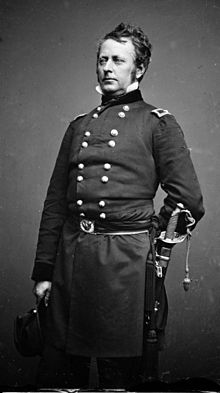
April 13, 1863 (Monday): Hooker's Worst Enemy-Hooker

General Joesph Hooker

HEADQUARTERS ARMY OF THE POTOMAC,
April 13, 1863-9.20 p. m.
Major General H. W. HALLECK,
General-in-Chief:
     If it is deemed of importance to keep open the telegraph communication to this point, it will require that a regiment of cavalry be sent from Washington to patrol and guard the line via Occoquan to Dumfries. My cavalry have other duties that will prevent their attending to this. The force should be send without delay.


    JOSEPH HOOKER,
    Major-General.


WASHINGTON, D. C., April 13, 1863.
Major-General HOOKER,
Headquarters Army of the Potomac:
    I do not think that the safety of Washington depends upon the maintenance of communication with your army, but I think it is your duty to maintain your communications with Washington, and to kept the War Department advised of all your movements and intended movements. You therefore have my orders to keep up such communications.


     H. W. HALLECK,
     General-in-Chief.

Official Records, Series I., Vol. 25, Part 2, Page 210.

Hooker was first and foremost about Joe Hooker.  A competent officer with some grasp of strategy, he devoted a great deal of time to gaining influence with politicians even if it came at the expense of his fellow officers.  He had no reason to keep Halleck uniformed of his movements, but felt it was not necessary.  When Halleck responded to his message Hooker forwarded the correspondence to the Secretary of War and asked it be laid before the President for his consideration.   

Thursday, April 11, 2013

April 12, 1863 (Sunday): Longstreet Moves on Suffolk

Wartime Suffolk (Harper's Weekly)
FORT MONROE, VA.,
April 12, 1863-12 noon.
Major-General DIX,
Numbers 3 West Twenty-first street, New York, N. Y.:
     General Peck telegraphs just now, "We are face to face. The attack is on the Somerton and Edenton front, and before this reaches you the fight will have commenced." I will have the Burden for you at Baltimore if you say so. I think you had better come down.


    D. T. VAN BUREN,
    Assistant Adjutant-General.

FORT MONROE, VA.,
April 12, 1863-4.30 p. m.
Major General H. W. HALLECK,
General-in-Chief:
    The following dispatches received to-day from General Peck at Suffolk, at 12.30 p. m.:
    The two armies are at this moment face to face. The attack is on the Somerton and Edenton road.
4 P. M.
     The enemy, after advancing within a short distance of my front, has fallen back 2 or 3 miles, and is reported moving from the Somerton road toward the Edenton road.


    D. T. VAN BUREN,
    Assistant Adjutant-General.


NORFOLK, VA., April 12, [1863.]-7.30 p. m.
(Received 9.15 p. m.)
Major General H. W. HALLECK,
General-in-Chief:
T   he enemy approached our lines at Suffolk to-day and exchanged some cannon-shots and retired. The force of the enemy is great and I think they will make a serious attack. General Peck has just telegraphed that he has reason to believe Longstreet is receiving re-enforcements and heavy artillery. Wise with his whole force is certainly in front of Williamsburg and Fitzhugh Lee is said to be approaching Gloucester Point, and some persons anticipate rebel gunboats down James River. Information from all quarters concurs to establish a simultaneous movement against all portions of our lines. I have made the best disposition in my power of our troops and supplies, but I would be glad to receive heavy re-enforcements if they could be spared. We have seven small gunboats on the Nansemond, which I think renders Peck's right flank secure.


    E. D. KEYES,
    Major-General.

HEADQUARTERS DEPARTMENT OF VIRGINIA,
Norfolk, Va., April 12, 1863.
    The proximity of the Confederate forces renders it proper, by virtue of the military and naval authority of the United States, to give the following notice:
    All foreign consuls and their families, all women and children, and all other persons not in the service of the United States who prefer safety to the conflicts of war, are notified that on the approach of the enemy to any town or village within this department and the range of the Union guns, such town or village will be fired on without further consideration.


    E. D. KEYES,
    Major-General, Commanding Department of Virginia.


APRIL 12, 1863.
Major-General KEYES:
    I believe Longstreet is receiving re-enforcements and heavy artillery by rail from Petersburg and Weldon.


    PECK,
    Major-General.


SUFFOLK, April 12, 1863.
Major-General KEYES:
    A force is on the road leading to the Nansemond. How far they will come down remains to be seen; will keep you advised. The rails were removed by some of the Ninth Corps men through a misunderstanding of orders given by the commander of that front. I slept none in consequence of these affairs and of the responsibility.


    PECK,
    Major-General.


SUFFOLK, VA., April 12, 1863.
Major General JOSEPH HOOKER,
Headquarters Army of the Potomac:
     Longstreet is now before me with a very heavy force. The attack is on my front, which cuts off much of the aid of the gunboats on the flanks. Prisoners say 30,000 and more.


    JOHN J. PECK,
    Major-General.
   
   (Copy to General Halleck.)

Official Records, Series I., Vol. 18, Part 1, Pages 599-600.

After the siege Longstreet said Suffolk could be taken in a few days but that he did not think "we can afford to spend the powder and ball."  Longstreet had originally been sent to southeast Virginia to interpose between Burnside and Petersburg, but after Burnside was sent with most of his force to Kentucky Longstreet was able to invest Suffolk.  Should Lincoln have moved Burnside to Kentucky?  It is interesting to consider whether the Gettysburg campaign would have been possible had a stronger force been maintained to threaten Richmond from the east.

Wednesday, April 10, 2013

April 11, 1863 (Saturday): Hooker Gives Lincoln His Plan

Pleasanton (R) and Custer (L) near Falmouth, Virginia


CAMP NEAR FALMOUTH, VA.,
April 11, 1863.
His Excellency the PRESIDENT OF THE UNITED STATES:
    After giving the subject my best reflection, I have concluded that I will have more chance of inflicting a heavier blow upon the enemy by turning his position to my right, and, if practicable, to sever his connections with Richmond with my dragoon force and such light batteries as it may be deemed advisable to send with them. I am apprehensive that he will retire from before me the moment I should succeed in crossing the river, and over the shortest line to Richmond, and thus escape being seriously crippled. I hope that when the cavalry have established themselves on the line between him and Richmond, they will be able to hold him and check his retreat until I can fall on his rear, or, if not that, I will compel him to fall back by the way of Culpeper and Gordonsville, over a longer line than my own, with his supplies cut off. The cavalry will probably cross the river above the Rappahannock Bridge, thence to Culpeper and Gordonsville and across to the Aquia Railroad, somewhere in the vicinity of Hanover Court-House. They will probably have a fight in the vicinity of Culpeper, but not one that should cause them much delay or embarrassment. I have given directions for the cavalry to be in readiness to commence the movement on Monday morning next. While the cavalry are moving, I shall threaten the passage of the river at various points, and, after they have passed well to the enemy's rear, shall endeavor to effect the crossing. I hope, Mr. President, that this plan will receive your approval. It will obviate the necessity of detaching a force from Washington in the direction of Warrenton, while I think it will enhance my chances for inflicting a heavy blow upon the enemy's forces.
We have no news from over the river to-day, the enemy refusing to let us have the newspapers. I sincerely trust that you reached home safely and in good time yesterday. We all look back to your visit with great satisfaction.
     Very respectfully, &c.,


     JOSEPH HOOKER,
     Major-General, Commanding.

Official Records, Series I. Vol. 25, Part 2, Pages 199-200.

Hooker here lays out a central part of his plan, the employment of Pleasanton's Cavalry to gain the rear of Lee's army and fix him in his retreat back toward Hanover until the Army of Potomac could bring its superior numbers to bear.  In this context the relatively minor battle at Kelly's Ford assumes greater significance in that it validated the ability of the Union horse soldiers to not only hold their ground against Stuart's cavalry but to be able to make raids into Confederate territory and disrupt supply lines and harass the enemy. 

Tuesday, April 9, 2013

April 10, 1863 (Friday): A Spy Reports

Richmond Defenses (mdgorman.com)


HDQRS. FIRST CAVALRY DIV., ARMY OF THE POTOMAC,
April 10, 1863.

P. H. WATSON, Esq.,
Assistant Secretary of War:
MY DEAR SIR: Mr. G. S. Smith, whom you sent down to me, has made his report, and his explanations are consistent, and appear satisfactory. I have sent him to General Hooker's headquarters, and submitted his case to that officer. He gives some points of information that seem to be important for you to know:
1. The rebel force on the Rappahannock has not been diminished. Two divisions of Longstreet's troops have returned to Fredericksburg.
2. The rebels are fortifying the fords of the Rapidan, and intend to fight on that stream and at Fredericksburg.
3. There are no works or troops on the railroad from Culpeper to within 3 mile of Richmond. All the heights around Richmond are fortified. He saw three of these works, viz: One on the Williamsburg road, with ten heavy guns mounted-very formidable; one on Murray Hill, with eight heavy guns and two light ones-mounted; one between Murray Hill and the river, with three light guns.
4. * * * The Merrimac Numbers 2 and one gunboat are at Fort Darling. Two new iron-clads now building, on model of Merrimac Numbers 2; no iron on yet; one planked, the other not quite. The iron appears to be ready. No troops to be seen near Richmond, except in the fortifications.
5. * * * The bread riots in Richmond were gotten up by Union men, of whom there are as many as ever. There is much suffering among the citizens in the South, but the soldiers are well supplied and are in good heart and spirits. Everybody has been conscripted. The troops have 22 ounces per day of flour, one-fourth pound of meat, with some sugar and rice occasionally. The rebel officers at Culpeper
appear to think it is not the intention to hold that country if pressed, but to fight on the Rapidan and at Fredericksburg.
6. * * * The blockade-rummers ship their goods by the Baltimore and Ohio Railroad to Long Creek Station, and from thence pass down the Valley through Brock's Gap to Staunton.
7. * * * There is a brigade of cavalry near Winchester, under Jones. White's battalion is between Jones and Culpeper. Cobb's Cavalry Legion is near Madison, at Wolftown.
8. * * * The rebels are seizing all the able-bodied negroes north of the Rappahannock and taking them south.
     Please acknowledge the receipt of this.
     I am, very respectfully, your obedient servant,


     A. PLEASONTON,
     Brigadier-General.

    P. S.-The rebels have [arrested] numbers of Northern men, under the plea of their being spies.

Official Records, Series I., Vol. 25, Part 2, Pages 196-197.

Reports from spies were often a varied lot.  In this case the informant in wrong about Longstreet's men returning to Lee.  As to the provisions for Lee's army, these two are overestimated.  In fact, at the time of this writing scurvy was present in the army due to poor nutrition.  However, the descriptions of the ship building underway at Richmond are mostly accurate.  And the Murray Hill battery described is probably Battery #11 of the Richmond defenses. 

Monday, April 8, 2013

April 9, 1863 (Thursday): "..To Cross Into Maryland"

Lee With Staff Officers
HEADQUARTERS ARMY OF NORTHERN VIRGINIA, April 9, 1863.
Honorable JAMES A. SEDDON,
Secretary of War:
    SIR: I have had the honor to receive your letter of the 6th instant. I do not know that I can add anything to what I have already said on the subject of re-enforcing the Army of the West. If a division has been taken from Memphis to re-enforce Rosecrans, it diminishes the force opposed to our troops in that quarter, and may enable them to take the aggressive and to call them back. The enemy is reported to have abandoned his operations on the Tallahatchee River, which releases General Loring's force also.
    I have thought it probable that the enemy may have determined to confine for the present the operations of the Army of the Potomac and of his army south of the James to the defensive, while with a portion of his troops from the east he should operate in Kentucky or elsewhere in the west; when the season shall suspend operations on the Mississippi, to return with an increased force to the east. There is, however, nothing as yet to show this determination, except the transfer of Burnside's corps to Kentucky.
    The most natural way to re-enforce General Johnston would seem to be to transfer a portion of the troops of this department to oppose those sent west, but it is not so easy for us to change troops from one department to another as it is for the enemy, and if we rely upon that method we may be always too late.
Should General Hooker's army assume the defensive, the readiest method of relieving the pressure upon General Johnston and General Beauregard would be for this army to cross into Maryland. This cannot be done, however, in the present condition of the roads, nor unless I can obtain a certain amount of provisions and suitable transportation. But this is what I would recommend, if practicable. 
    General Longstreet is now engaged on an extended line, endeavoring to withdraw supplies from the invaded district south of James River.  He does not think that he has troops enough for the purpose, and has applied for more of his corps to be sent to him, which I have not thought advisable to do. If any of his troops are taken from him, I fear it will arrest his operations and deprive us of the benefit anticipated from increasing the supplies of the army. I must, therefore, submit your proposition to the determination of yourself and the President. If you think it will be advantageous at present to send a part of the troops operating in North Carolina to General Johnston, General Longstreet will designate such as ought to go.
    If Generals Pegram, Marshall, and Samuel Jones can by judicious operations occupy General Burnside in Kentucky, it will relieve General Johnston more than by sending their troops to him.
    I have the honor to be, your obedient servant,


    R. E. LEE,
    General.

Official Records, Series I., Vol. 25, Part 2, Pages 713-714.

Johnston had been besieging the War Department to send reenforcements from the east.  Here is Lee's formal response to Seddon.  In it you some one of the first imaginings of an offensive into the north.  However, it was predicated on the idea of Hooker remaining on the defensive.  This would not come to pass until Lee enforced inactivity upon the Union army by defeating it at Chancellorsville.  It is interesting to see Lee arguing against the advantage he enjoyed of interior lines.  However, it is probably not an unrealistic view, given the state of southern railroads.


Sunday, April 7, 2013

April 8, 1863 (Wednesday): Inside of Charleston Bar

USS New Ironsides (history.navu.mil)

FLAG-SHIP NEW IRONSIDES,
Inside of Charleston Bar, April 8, 1863.
Major General D. HUNTER,
Commanding Dept. of the South, U. S. S. Ben. De Ford, off Charleston:
    GENERAL: The iron-clads weighed anchor at nor yesterday to go forward to attack Fort Sumter, but were delayed for nearly two hours by the accident which fouled the anchor and raft of the leading vessel (the Weehawken).
    The Ironsides became unmanageable in the narrow channel and occasioned further delay under fire, so that finding that, I should not reach the obstructions before 5 o'clock, I ordered the vessels withdrawn from action, with the intention of renewing in this morning.
    During the night I received the statements of the commanding officers, and find the ships so much damaged during their engagement as to force me to the conviction that they could not endure the fire to which they would be exposed long enough to destroy Fort Sumter or reach Charleston. I am now satisfied that that place cannot be taken by a purely naval attack, and I am admonished by the condition of the iron-clads that a persistence in our efforts would end in disaster, and might cause us to leave some of our iron-clads in the hands of the enemy, which would render it difficult for us to hold those parts of the coast which are now in our possession.
     I have therefore determined to withdraw my vessels, and have written to the Navy Department to that effect.
     I am, general, very respectfully, your obedient servant,


     S. F. DuPONT,
     Read-Admiral, Commanding South Atlantic Blockading Squadron.

Official Records, Series I., Vol. 14, Part 1, Page 442.

The traditional narrative is that masonry forts were no match for the forces arrayed against them.  But at Fort McAllister (largely of earth construction) and Fort Sumter (where damaged rubble was reinforced with earthworks) naval forces were exposed to a destructive fire which drove them away.