Tuesday, May 14, 2013

May 15, 1863 (Friday): The Jones-Imboden Raiders Return

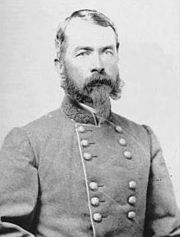
General Samuel Jones

HEADQUARTERS DEPARTMENT OF WESTERN VIRGINIA,
Dublin, May 15, 1863.
Honorable JAMES A. SEDDON,
Secretary of War:
    SIR: Brigadier-General Imboden and his command were at Bulltown, Braxton County, on Saturday night, the 9th instant. Brigadier General W. E. Jones had started from Weston to destroy the railroad between Clarksburg and Parkersburg. He and Imboden were then to unite at Summerville, and would then, as Imboden informs me, be ready strike at Charleston or any other point I might direct. This information was sent to me in a letter from Major Claiborne, and officer of the command, dated at Lewisburg on the 13th instant. Major Claiborne was sent by Imdoben to convey the information to me.
    Hearing that the enemy was sending re-enforcements to Summerville, I directed Brigadier-General Echols to move forward two battalions of infantry, a section of artillery, and company of cavalry to Imboden's support at Summerville. I think Imboden's force alone is strong enough to drive the enemy from Summerville, but if Echols reaches there in time, they may capture any force the enemy has there.
    I have ordered Colonel McCausland to move from Princeton with about 1,200 infantry, a battery, and company of cavalry, and threaten Fayetteville, to prevent the enemy from detaching any force from that place to interfere with Imboden.
     I have also directed Imboden that if, after he reaches Summerville, his men are in condition to continue the expedition, to move and strike the Kanawha at or near Montgomery's Ferry; clear out that valley between Gauley and Charleston; then cross over and take Fayetteville in rear, while McCausland threatens it in front.
    I communicate this information to you chiefly that you may communicate such instructions for W. E. Jones and Imboden to move eastward as rapidly as possible, and, not knowing where they were, could send them the order. Any instructions you may desire to send had better be sent through me, and I will forward them without delay.
     Most respectfully, sir, your obedient servant,


    SAM. JONES,
    Major-General.

Official Records, Series I., Vol. 25, Part 2, Page 803.

 Jones and Imboden's raid began on April 20th with a mission to attack the B&O Railroad between the Maryland line and Rowlesburg, W. Va.  Jones accomplished his part of the raid, destroying railroad bridges between Rowlesburg and the Alleghany Mountains, going on to threaten Wheeling and Pittsburgh.  But Imboden had failed to destroy the bridge at Rowlesburg, which was the key part of the mission.  W. E. Jones, who led the raid, was in command of the Valley District and Samuel Jones (the writer of the letter) was in command of the Department of Western Virginia, which included most of the Confederacy's salt works.

Monday, May 13, 2013

May 14, 1863 (Thursday): Intrique in Richmond

A Wartime Letter Written by Jefferson Davis


His Excellency ABRAHAM LINCOLN,
President of the United States, Washington, D. C.:
     The following is a copy of an original letter of Jefferson Davis in my possession.


     DANL. BUTTERFIELD,
     Major-General and Chief of Staff.


    [Inclosure]

RICHMOND, VA.,
May 1, 1863-Sunday a.m.
Colonel
------
:
     MY DEAR SIR: Inclosed I send you a telegram from Isaac, as requested by him. Our news from Mississippi is not definite beyond the fact that [John S.] Bowen, after engaging the enemy south of Port Gibson, had, under cover of night, fallen back across the Bayou Pierre, and that Loring was moving to his support from Vicksburg. The enemy landed in large force near Bruinsburg and have made cavalry raids as far as the New Orleans and Jackson Railroad. General Pemberton, as you are aware, is very deficient in cavalry, and is greatly outnumbered in infantry. We are looking, with intense anxiety to the operations of your army, and I have made earnest though not very successful efforts to give it prompt re-enforcements.
     With best wishes, I am, as ever, your friend.


     JEFFERSON DAVIS.

Official Records, Series I., Vol. 25, Part 2, Page 480.

How is it Butterfield (Hooker's Chief of Staff) came into possession of a recently signed letter from the Confederacy's President?  It hints of intrigue, coupled with the recent presence near Richmond of Union cavalry.  Perhaps a messenger was captured with the memo, but then again it would not have been the first time Davis' office was spied upon.  In 1861 a slave serving in the rebel White House crossed into Union lines and recounted very clearly conversations had there by Davis.  Perhaps there were still spies in Richmond.


Sunday, May 12, 2013

May 13, 1863 (Wednesday): Hooker Wants to Move Again Against Lee

General Joseph Hooker

CAMP NEAR FALMOUTH, VA.,
May 13, 1863.
    His Excellency to PRESIDENT OF THE UNITED STATES:
    My movements have been a little delayed by the withdrawal of many of the two-year's and nine-months' regiments, and those whose time is not already up it will be expedition to leave on this side of the river. This reduction imposes upon me the necessity of partial reorganization. My marching force of infantry is cut down to about 80,000, while I have artillery for an army of more than double that number. It has always been out of proportion, considering the character of the country we have to campaign in, and I shall be more efficient by leaving at least one-half of it in depot. In addition, Stoneman's cavalry returned to camp day befroe yesterday, and will require a day or two more to be in readiness to resume operations.
    I know that you are impatient, and I know that I am, but my impatience must not be indulged at the expense of dearest interests.
    I am informed that the bulk of Longstreet's force is in Richmond. With the facilities at hand, he can readily transfer it to Lee's army, and no doubt will do so if Lee should fight and fall back, as he will try to do.
The enemy's camps are reported to me as being more numerous than before our last movement, but of this I have no positive information. They probably have about the same number of troops as before the last battle, but with these and Longstreet's they are much my superior, besides having the advantage of acting on the defensive, which, in this country, can scarcely be estimated.
    I hear nothing of Peck's movements and of the force at West Point, which is too small to be of much importance in the general movement. If it is expected that Peck will be able to keep Longstreet's force in and about Richmond, I should be informed of it, and if not, a reserve infantry force of 25,000 should be placed at my disposal in this vicinity. I merely state this for your information, not that I know even that you have such a force, or, if you have, that you would be disposed to make use of it in this way. I only desire that you should be informed of my views. In my opinion, the major part of the troops on the Upper Potomac, in and around Washington and Baltimore, are out of position, and if great results are expected from the approaching movement, every man and vessel at the disposal of the Government should be assigned their posts. I hope to be able to commence my movement to-morrow, but this must not be spoken of to any one.
    Is it asking too much to inquire your opinion of my Orders, Numbers 49?* If so, do not answer me.
Jackson is dead, and Lee beats McClellan in his untruthful bulletins.
     Very respectfully, your obedient servant,


    JOSEPH HOOKER,
    Major-General, Commanding.


*See Part I, p. 171.

Official Records, Series I., Vol. 25, Part 2, Page 473.

Hooker went to Washington the evening of this note.  The following day Lincoln sent him a letter saying because of the strength of the Confederate it did not appear he could accomplish anything by recrossing the Rappahannock.  He also told Hooker he was concerned it appeared some of his corp and division commanders did not give him their entire confidence.  Orders Number 49, referred to here, were Hooker's congratulatory orders to his troops after the battle of Chancellorsville.  In essence, they indicated they had accomplished much, and were not driven back across the river but left on their own accord.


May 12, 1863 (Tuesday): The Battle of Raymond

McPherson's Ridge at Raymond Battlefield (CivilWarAlbum.com)

DILLON'S PLANTATION, MISS., May 12, 1863-9. 15 p. m.
Major General John A. McClernand, Comdg. Thirteenth Army Corps:
     General McPherson gained Raymond this afternoon, after a severe fight of several hours, in which we lost from 400 to 500 killed and wounded. The enemy was driven at all points, leaving most of his wounded and over 100 prisoners in our hands.
     He retreated toward Clinton, and no doubt to Jackson. I have determined to follow, and take first the capital of the State. Accordingly McPherson is ordered to move at daylight from Raymond toward Clinton and Jackson. Sherman leaves here at 4 o'clock in the morning, in the same direction. You will start with three of your divisions as soon as possible, by the road north of Fourteen-Mile Creek, to this place, and on to Raymond. The road is plain, and cannot be mistaken. A supply train left Grand Gulf yesterday, and Blair's division with an additional train, to-day.
     Under present instructions, these trains will divide at the forks of the road where you and Sherman separated this morning. I would direct, therefore, that your Fourth division go back to Old Auburn, and wait until these trains come up, both of them, and conduct them after the army on the Raymond road, until they receive further orders from these headquarters.


     U. S. GRANT.

Official Records, Series I., Vol. 24, Part 3, Page 300.

Grant's intention had been to combine with Banks in operations against Fort Hudson, Louisiana and then move on Vicksburg.  But he learned Banks was engaged in his own campaign (known as the Red River Campaign) and would not return to Baton Rouge until May 10th, and then with only 15,000 men.  So Grant decided to advance on Jackson and attempt to get between the separated wings of Confederate forces who were attempting to concentrate there.  He could have moved directly on Vicksburg, but in doing so would not have disrupted the re-enforcements would have come to Pemberton's aide.  At Raymond the Confederate brigade of John Gregg formed south of town and held off McPherson from 11 a.m. until late afternoon.  This confirmed for Grant the idea that considerable force was building at Jackson.

Saturday, May 11, 2013

May 11, 1863 (Monday): Stuart Feels Slighted

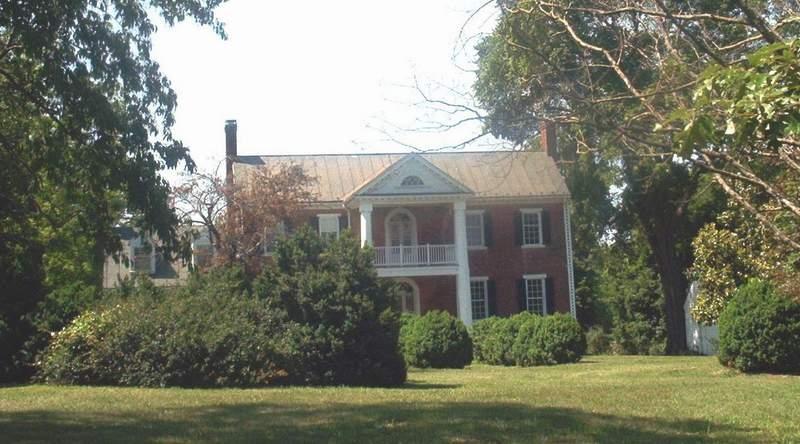
Fredericks Hall VA (usgwararchives.net)

HEADQUARTERS, Fredericksburg, May 11, 1863.
General J. E. B. STUART,
Commanding Cavalry:
    GENERAL: I received your note of the 9th, and I am glad that the railroad bridge will be so soon completed. When it is done, unless circumstances in your opinion prevent, I request you to move into Culpeper, where you can better observe the enemy. I shall be glad to get your view as to the increase of the cavalry, and I need not assure you that nothing will be wanted on my part to augment it. Do you know how many brigades compose the cavalry divisions of the enemy, and who are the brigade commanders? If you think a visit to Richmond, on your part, will expedite the organization or equipment of your command, I have no objection, but, on the contrary, recommend it. I believe I told you of my wish to place Jenkins' cavalry in the Valley and draw Jones' to you. I thought it would give you a more reliable and larger force, from which you could re-enforce either flank, a necessary. What do you think of it? I have ordered Jenkins to assemble his companies (which have been scattered for forage) at Staunton. Hood is at Fredericksburg Hall. Communicate with him, and keep him advised of movements of enemy. I have directed him, as far as possible, to guard bridges over the North Anna, &c. I hope between you two you may scatter Stoneman. Rhett has been ordered from Gordonsville to Richmond. His troops I think necessary there.
    As regards the closing remarks of your note, I am at a loss to understand their reference or to know what has given rise to them. In the management of the difficult operations at Chancellorsville, which you so promptly undertook and creditably performed, I saw no errors to correct, nor has there been a fitting opportunity to commend your conduct. I prefer your acts to speak for themselves, nor does your character or reputation require bolstering by out-of-place expression of my opinions.
     I regret to inform you that the great and good Jackson is no more. He died yesterday at 3.15 p.m., of pneumonia, calm, serene, and happy May his spirit pervade our whole army; our country will then be secure.
     Very truly, yours,


     R. E. LEE,
     General.

P. S.-From indications observed yesterday, it seems probable General Hooker is contemplating some new movement. The late Washington papers seem also to indicate something. They claim a great victory. Keep your scouts on the alert.

Official Records, Series I., Vol. 25, Part 2, page 792.

This most interesting note cannot be matched to Stuart's letter of the 9th, as it is not in the O.R.  Did Stuart believe he had not received sufficient credit for taking charge of Jackson's Corp after his wounding?  Stuart was anxious to get at the Union troopers, who were being given great credit for their raid behind Confederate lines, while Lee had been counseling patience.  Were the roots of Stuart's misadventure during the Gettysburg campaign sown with his perceived slight after Chancellorsville?  Lee probably rubbed some salt in the wound without meaning by reminding Stuart that Union papers considered the battle a victory because of the success of the Union cavalry.

Thursday, May 9, 2013

May 10, 1863 (Sunday): A Great National Calamity

Guinea Station-Site of Jackson's Death (NPS.gov)


FREDERICKSBURG, May 10, 1863.
Hon. JAMES A. SEDDON,
Secretary of War:
    It becomes my melancholy duty to announce to you the death of General Jackson. He expired at 3.15 p.m. to-day. His body will be conveyed to Richmond in the train to-morrow, under charge of Major Pendleton, assistant adjutant-general. Please direct an escort of honor to meet it at the depot, and that suitable arrangements be made for its disposition.


     R. E. LEE,
     General.


RICHMOND, VA., May 11, 1863.
General R. E. LEE:
     DEAR GENERAL: A great national calamity has befallen us, and I sympathize with the sorrow you feel and the embarrassment you must experience. The announcement of the death of General Jackson following frequent assurances that he was doing very well, and though the loss was one which would have been deeply felt under any circumstances, the shock was increased by its suddenness.
    There is sincere mourning here, and it will extend throughout the land as the intelligence is received.


    Your friend,
    JEFFERSON DAVIS.

Official Records, Series I., Vol. 25, Part 2, Page 791.

It was a shocking development.  Jackson had rallied for a time after his arm was amputated, but ultimately succumbed to pneumonia.  The deaths of Jackson and Lincoln were national events before the time of mass communication and both elicited deep mourning in their respective regions.  While many would mark Gettysburg as the turning point of the war, the death of Jackson marks a clear dividing point.  The Army of Northern Virginia would be effective, but never the same, after his death.

Wednesday, May 8, 2013

May 9, 1863 (Saturday): "Give them breathing time..."

General J.E.B. Stuart

HEADQUARTERS, May 9, 1863.
General STUART,
Commanding Cavalry:
     GENERAL: Your note of the 8th has been received. The boats are at Orange Court-House, or perhaps back at Gordonsville, but they are without horses. I have no objection to your taking them if you require them, but you will not be able to transport them, or, I fear, protect them.  The river would in all probability subside before you could get them in place. They are in charge of Captain Douglas, of the Engineers. Call upon him in my name if you desire them.
     As regards General W. E. Jones, I have had it in my mind to make a change in the Valley, and order him to report with his brigade to you, and place the cavalry from Western Virginia there. I am perfectly willing to transfer him to Paxton's brigade if he desires it; but if he does not, I know of no act of his to justify my doing so. Do not left your judgment be warped. Hampton has probably joined you. Get your cavalry together, and give them breathing time, so as to when you do strike, Stoneman may feel you.
       Very truly,


      R. E. LEE,
      General.

Official Records, Series I., Vol. 25, Part 2, Pages 788-789.

Stuart was asking after the Confederate pontoon bridges, which would indicate he had in mind an excursion across the Rappahannock (at least). Lee's caution to let his men rest awhile was sound.  The desire to do something of note after the ignominy of Stoneman's cavalry penetrating to the gates of Richmond must have burned bright in Stuart, but the need to rest exhausted men and horses after arduous service could not be ignored.  As for General W. E. "Grumble" Jones, Lee would return him to Stuart (it would appear from Lee's comments he knew this would not please the cavalry commander) on the 28th, exchanging him for Isaac Trimble, still recovering from wounds incurred during the 2nd Manassas campaign.