Tuesday, July 2, 2013

July 3, 1863 (Saturday): Shot With A Ten Penny Nail

1882 View of "The Angle" (nps.gov)

HEADQUARTERS CAVALRY CORPS, July 3, 1863-6 a. m.
Brigadier-General GREGG, Commanding Second Cavalry Division:
    GENERAL: The general commanding is fearful of the enemy obtaining possession of the ridge on the Baltimore turnpike, behind the bridge, which is the right of General Slocum's position, and wishes you to place a force of cavalry and battery, to hold that position, to the right of the road facing Gettysburg. This point is so important that it must be held at all hazards.
     Very respectfully,


      A. PLESONTON,
      Major-General, Commanding.

BATTLE-FIELD, Gettysburg, Pa., July 3, 1863-7 a. m.
(Received 8. 30 p. m.)
General M. C. MEIGS, Quartermaster-General, Washington:
    At this moment the battle is raging as fiercely as ever. The fight was renewed at 3. 30 this morning. The loss has been great on both sides. All our forces have been, and still are, in action, and we shall be compelled too stand and fight it out. There is a unanimous determination to resist until we drive the rebels. They began the fight, but we have repulsed them at all points, and hold our original battleground. This entire army has fought with terrible obstinacy, and has covered itself with glory. Pity it is not larger.
We have supplies at Westminster, which must come up to-morrow if we remain here. The contest will be decided to-day, I think.


     RUFUS INGALLS,
     Brigadier-General, Chief Quartermaster.


HEADQUARTERS ARMY OF THE POTOMAC,
July 3, 1863-8 a. m. (Received 5. 10 p. m.)
Major General H. W. HALLECK,
General-in-Chief:
    The action commenced again at early daylight upon various parts of the line. The enemy thus far have made no impression upon my position. All accounts agree in placing the whole army here. Prisoners report Longstreet's and A. P. Hill's forces much injured yesterday and many general officers killed. General Barksdale`s (Mississippi) dead body is within our lines. We have thus far sent off about 1, 600 prisoners, and a small number yet to be started. I have given certain instructions to General French, which he will telegraph you. The dispatches from you yesterday, owing to the disappearance of Caldwell, telegraph operator, are here in cipher, unintelligible.


     GEO. G. MEADE,
     Major-General.

JULY 3, 1863-12. 30 p. m.
Major-General HALLECK, (Received 11 p. m.)
General-in-Chief:
     At the present moment all is quiet. Considerable firing, both infantry and artillery, has taken place in various parts of our line, but no development of the enemy's intentions. My cavalry are pushing the enemy on both my flanks, and keeping me advised of any effort to outflank me. We have taken several hundred prisoners since morning.


     GEO. G. MEADE.

HEADQUARTERS ELEVENTH CORPS,
July 3, 1863-2. 15 p. m.
     SIR: The fire has been concentrated upon this point about an hour, with no great effect. The batteries on our right do not reach us, and in the center invariably overshoot us.
     Respectfully,


     O. O. HOWARD,
     Major-General, Commanding.
 
     Major-General MEADE,
     Commanding Army of the Potomac.


HDQRS. ARMY OF THE POTOMAC, July 3, 1863-9. 57 p. m.
(Copy received, War Department, July 4, 8. 40 a. m.)
Major General D. N. COUCH, Harrisburg, Pa.:
     You will be apprised of my operations through my dispatch to the General-in-Chief. I do not think Lee will attack me again, but am as yet uncertain whether he will assume an offensive attitude, and await an attack from me, or whether he will withdraw down the Cumberland Valley, holding strongly the mountain passes, which, I understand, he has fortified. Should the former be the case, I will apprise you of the facts so soon as I am certain of it, and I then desire you either to form a junction with me, or, if in your judgment the same can be done without jeopardizing the safety of your command, attack him. Should I be satisfied that he is retreating, I shall then move down on this side of the mountain, and wish you to pursue him as rapidly as possible down the Valley.


     GEO. G. MEADE,
     Major-General, Commanding.


HEADQUARTERS SECOND CORPS, July 3, 1863.
    Although I repulsed a tremendous attack, yet on seeing it from my left and advancing to the right, I, much to my sorrow, found that the twelve guns on my salient had been removed by some one, whom I call upon you to hold accountable, as without them, with worse troops, I should certainly have lost the day. I arrived just in time to put a small battalion of infantry in the place occupied by those two batteries. I have never seen a more formidable attack, and if the Sixth and Fifth Corps have pressed up, the enemy will be destroyed.     The enemy must be short of ammunition, as I was shot with a ten penny nail.
     I did not leave the field till the victory was entirely secured and the enemy no longer in sight. I am badly wounded, though I trust not seriously. I had to break the line to attack the enemy in flank on my right, where the enemy was most persistent after the front attack was repelled. Not a rebel was in sight upright when I left. The line should be immediately restored and perfected. General Caldwell is in command of the corps, and I have directed him to restore the line.
    Your obedient servant,


    WINF'D S. HANCOCK,
    Major-General,

     By A. N. DOUGHERTY, Surgeon, and Medical Director Second Corps.
     General MEADE.


Official Records, Series I., Vol. 27, Part 1, Pages, 74,366, 697 Part 3, Pages 499, 502, 503.

Hancock learned first hand of the dearth of ammunition available to the Confederates, having been shot with a nail.  Meade remains low key, an example of a man who fit a momentous hour.  It is unfortunate so little Confederate correspondence from the battlefield at Gettysburg exists, as there are so many questions regarding Confederate strategy and preparations for Day 3.

Monday, July 1, 2013

July 2, 1863 (Thursday): "This is a good point for observation."

Little Round Top (cr.nps.gov)

ROUND TOP MOUNTAIN SIGNAL STATION, July 2, 1863-11. 55 a. m.
General BUTTERFIELD:
     The rebels are in force, and our skirmishers give way. One mile west of Round Top signal station, the woods are full of them.


     JEROME,
     Lieutenant, Signal Officer.

CEMETERY SIGNAL STATION, July 2, 1863-12. 35 p. m.
General BUTTERFIELD:
    Numerous fires, apparently from the burning of wagons south-southeast from here. A wagon train can be seen in the same direction. I think our trains are being destroyed.


     BABCOCK,
     Captain, Signal Officer.

ROUND TOP MOUNTAIN SIGNAL STATION, July 2, 1863-1. 30 p. m.
General BUTTERFIELD:
A heavy column of enemy's infantry, about 10, 000 strong, is moving from opposite our extreme left toward our right.


    HALL.
    Captain, Signal Officer.

[JULY 2], 1863.
General HOWARD:
     Over a division of the rebels is making a flank movement on our right; the line extends over a mile, and is advancing, skirmishing. There is nothing but cavalry to oppose them.


      A. B. JEROME,
     First. Lieutenant, Signal Officer.

ROUND TOP SIGNAL STATION, July 2, 1863-2. 10 p. m.
General BUTTEFIELD:
Those troop were passing on a by-road from Dr. Hall's house to Herr's tavern, on the Chambersburg pike. A train of ambulances is following them.


     HALL,
     Captain, Signal Officer.

HEADQUARTERS ARMY OF THE POTOMAC, PA.,
July 2, 1863-3 p. m. (Received July 3, 10. 20 a. m.)
Major General H. W. HALLECK,
General-in-Chief:
     I have concentrated my army at this place to-day. The Sixth Corps is just coming in, very much worn out, having been marching since 9 p. m. last night. The army is fatigued. I have to-day, up to this hour, awaited the attack of the enemy, I having a strong position for defensive. I am not determined, as yet, on attacking him till his position is more developed. He has been moving on both my flanks, apparently, but it is difficult to tell exactly his movements. I have delayed attacking, to allow the Sixth Corps and parts of other corps to reach this place and to rest the men.
     Expecting a battle, I ordered all my trains to the rear. If not attacked, and I can get any positive information of the position of the enemy which will justify me in so doing, I shall attack. If I find it hazardous to do so, or am satisfied the enemy is endeavoring to move to my rear and interpose between me and Washington, I shall fall back to my supplies at Westminster. I will endeavor to advise you as often as possible. In the engagement yesterday the enemy concentrated more rapidly than we could, and toward evening, owing to the superiority of numbers, compelled the Eleventh and First Corps to fall back from the town to the heights this side, on which I am now posted. I feel fully the responsibility resting upon me, but will endeavor to act with caution.


     GEO. G. MEADE,
     Major-General.

SIGNAL STATION NEAR WADSWORTH'S HEADQUARTERS, July 2, 1863-4. 35 p. m.
Captain NORTON:
One regiment rebel infantry has just come out of the woods into a field east- northeast from here. The enemy's sharpshooters are in the woods at the foot of this hill. I can see sixteen guns, not in position-eight north-northwest and eight northeast from here. Very respectfully,


      N. HENRY CAMP,
      Lieutenant, Signal Officer.


HEADQUARTERS ARMY OF THE POTOMAC, July 2, 1863-5. 30 p. m.
Commanding Officer Twelfth Corps:
     The signal officer reports that a heavy column of infantry is moving round to the right, and in front of Slocum's corps. By command of Major-General Meade:


     S. WILLIAMS,
     Assistant Adjutant-General.

ROUND TOP MOUNTAIN SIGNAL STATION, July 2, 1863.
Captain HALL:
     Saw a column of the enemy's infantry move into woods on ridge, 3 miles west of the town, near the Millerstown road. Wagon teams, parked in open field beyond the ridge, moved to the rear, behind woods. See wagons moving up and down on the Chambersburg pike, at Spangler's. Think the enemy occupies the range of hills 3 miles west of town in considerable force.


      NORTON,
      TAYLOR,
    
      Signal Officer.

[P. S.]-This is good point for observation.

SIGNAL STATION, July 2, 1863.
General MEADE:
Millerstown Cross-Roads is about 8 miles, a little south of west from the signal station 1 1/2 miles to the south of this house.


      L. B. NORTON,
     Captain, and Chief Signal Officer.

HEADQUARTERS ARMY OF THE POTOMAC,
July 2, 1863-8 p. m. (Received July 3, 5. 15 p. m.)
Major General H. W. HALLECK,
General-in-Chief:
     The enemy attacked me about 4 p. m. this day, and, after one of the severest contests of the war, was repulsed at all points. We have suffered considerably in killed and wounded. Among the former are Brigadier-Generals Paul and Zook, and among the wounded, Generals Sickles, Barlow, Graham, and Warren, slightly. We have taken a large number of prisoners. I shall remain in my present position to-morrow, but am not prepared to say, until better advised of the condition of the army, whether my operations will be of an offensive or defensive character.


    GEO. G. MEADE,
    Major-General.


Minutes of council, July 2, 1863. *
QUESTIONS ASKED.
1. Under existing circumstances, is it advisable for this army to remain in its present position, or to retire to another nearer its base of supplies?
2. It being determined to remain in present position, shall the army attack or wait the attack of the enemy?
3. If we wait attack, how long?
REPLIES.
GIBBON:
1. Correct position of the army, but would not retreat.
2. In no condition to attack, in his opinion.
3. Until he moves; until enemy moves.
WILLIAMS:
1. Stay.
2. Wait attack.
3. One day.
BIRNEY:
Same as General Williams.
SYKES:
Same as General Williams.
NEWTON:
1. Correct position of the army, but would not retreat.
2. By all means not attack.
3. If we wait, it will give them a chance to cut our line.
HOWARD:
1. Remain.
2. Wait attack until 4 p. m. to-morrow.
3. If don't attack, attack them.
HANCOCK:
1. Rectify position without moving so as to give up field.
2. Not attack unless our communications are cut.
3, Can't wait long; can't be idle.
SEDGWICK:
1. Remain, and wait attack at least one day.
SLOCUM:
Stay and fight it out.
[MEMORANDUM.]+
SLOCUM:
Stay and fight it out.
NEWTON:
Thinks it is a bad position.
HANCOCK:
Puzzled about practicability of retiring; thinks by holding on--- to mass forces and attack.
HOWARD:
Favor of not retiring.
BIRNEY:
Don't know; Third Corps used up, and not in good condition to fight.
SEDGWICK:
Doubtful*

Effective strength about 9, 000, 12, 000, 9, 000, 6, 000, 8, 500, 6, 000, 7000, ; total, 58, 000.

[Indorsement.]
Minutes of council, held Thursday p. m., July 2.

D. B.
M. G., C. of S.

*Original in pencil, and found among General Meade's papers. See circular of March 10, 1864, from Headquarters Army of the Potomac, and replies thereto, pp. 123 et seq., and Butterfield to Williams, and reply, of March 23, 1864, p. 138.
+This memorandum is without a heading in the original.
---Illegible word.

.Official Records, Series I., Vol. 27, Part 1, Pages 72-73, Vol. 3, Pages 488-489.

Two distinctly unique views of Day 2 at Gettysburg.  The reports of Union signal officers and the results of a council of war held by Meade at the end of the day.  The perilous position of the Union left becomes clear from the signal officers reports, as does the fact Longstreet's Corp was observed by midday despite his attempts to remain out of view.  The council of war is a good reflection of the condition of Meade's troops after the second day of fighting.

Sunday, June 30, 2013

July 1, 1863 (Wednesday): Contact

Barlow's Knoll After First Day's Battle


HARRISBURG, PA., July 1, 1863-12. 45 a. m. (Received 1. 35 a. m.)
Major General H. W. HALLECK,
General-in-Chief:
     Information just received, 12. 45 a. m., leads to the belief that the concentration of the forces of the enemy will be at Gettysburg rather than at Chambersburg. The movement on their part is very rapid and hurried. They returned from Carlisle in the direction of Gettysburg by way of the Petersburg pike. Firing about Petersburg and Dillsburg this p. m. continued some hours. Meade should by all means be informed, and be prepared for a sudden attack from Lee's whole army.


      H. HAUPT,
      Brigadier-General.

(Sent to General Meade be courier from Frederick, at 2 p. m. ; copy to General Schenck.)

HEADQUARTERS ARMY OF THE POTOMAC,
Nine Miles east of Middleburg, July 1, 1863-7 a. m.
(Received 4 p. m.)
Major General H. W. HALLECK,
General-in-Chief:
   Dispatches of General Couch and General Haupt received. My positions to-day are, one corps at Emmitsburg, two at Gettysburg, one at Taneytown, one at Two Taverns, one at Manchester, one at Hanover. These movements were ordered yesterday, before the receipt of advices of Lee's movements. Our cavalry, under Kilpatrick, had a handsome fight yesterday at Hanover. He reports the capture of 1 battle-flag, a lieutenant-colonel, 1 captain, with 15 or 20 of the enemy killed. The point of Lee's concentration and the nature of the country, when ascertained, will determine whether I attack him or not. Shall advise you further to-day, when satisfied that the enemy are fully withdrawn from the Susquehanna. If General Couch has any reliable force. I shall call upon him to move it to aid me.


     GEO. G. MEADE,
     Major-General, Commanding.

WASHINGTON, D. C., July 1, 1863-10. 45 a. m.
Major-General MEADE,
Army of the Potomac:
     The movements of the enemy yesterday indicate his intention to either turn your left, or to come himself by the South Mountain and occupy Cumberland Valley. Do not let him draw you too far to the east.


     H. W. HALLECK,
    General-in-Chief.


TANEYTOWN, July 1, 1863-12 m.
General HALLECK:
Dispatch sent last night giving my position at Emmitsburg, Gettysburg, and Hanover. Ewell is massing at Heidlersburg. A. P. Hill is massed behind the mountains at Cashtown. Longstreet somewhere between Chambersburg and the mountains. The news proves my advance has answered its purpose. I shall not advance any, but prepare to receive an attack in case Lee makes one. A battle-field is being selected to the rear, on which the army can be rapidly concentrated, on Pike Creek, between Middleburg and Manchester, covering my depot at Westminster. If I am not attacked, and I can from reliable intelligence have reason to believe I can attack with reasonable degree of success, I will do so; but at present, having relieved the pressure on the Susquehanna, I am now looking to the protection of Washington, and fighting my army to the best advantage.

1 P. M.
The enemy are advancing in force on Gettysburg, and I expect the battle will begin to-day.

     GEO. G. MEADE.


HEADQUARTERS ARMY OF THE POTOMAC, July 1, 1863.
[General SEDGWICK:]
    DEAR SEDGWICK: I transmit herewith an order directing that General Newton assume the command of the First Corps. General Meade wishes him to proceed to the front with all possible dispatch. It is with great regret I inform you that General Reynolds was killed in the engagement of to-day in front of Gettysburg. We have as yet none of the particulars of his death. There is nothing very recent from the front. The enemy appear to be concentrating, and I suppose to-morrow a great battle will be fought. I remain, very truly, yours,


    S. WILLIAMS.


HEADQUARTERS FIRST CAVALRY DIVISION,
July 1, 1863-3. 20 p. m.
     I am satisfied that Longstreet and Hill have made a junction. A tremendous battle has been raging since 9. 30 a. m., with varying success. At the present moment the battle is raging on the road to Cashtown, and within short cannon-range of this town. The enemy's line is a semicircle on the height, from north to west. General Reynolds was killed early this morning. In my option, there seems to be no directing person.


      JNO. BUFORD,
      Brigadier-General of Volunteers.

     General Pleasonton.
     P. S. -We need help now.


HEADQUARTERS ARMY OF THE POTOMAC,
July 1, 1863-6 p. m.
(Received 10. 20 p. m., via Frederick City.)
Major General H. W. HALLECK,
General-in-Chief:
     The First and Eleventh Corps have been engaged all day in front of Gettysburg. The Twelfth, Third, and Fifth have been moving up, and all, I hope, by this time on the field. This leaves only the Sixth, which will move up to-night. General Reynolds was killed this morning early in the action. I immediately sent up General
Hancock to assume command. A. P. Hill and Ewell are certainly concentrating; Longstreet's whereabouts I do not know. If he is not up to-morrow, I hope with the force I have concentrated to defeat Hill and Ewell. At any rate, I see no other course than to hazard a general battle. Circumstances during the night may alter this decision, of which I will try to advise you. I have telegraphed Couch that if he can threaten Ewell's rear from Harrisburg without endangering himself, to do so.


     GEO. G. MEADE,
     Major-General.

HEADQUARTERS, Taneytown, July 1, 1863-7. 30 p. m.
Major-General SEDGWICK:
    GENERAL: The major-general commanding directs me to say that a general battle seems to be impending to-morrow at Gettysburg; that it is of the utmost importance that your command should be up. He directs that you stop all trains that impede your progress, or turn them out of the road. Your march will have to be a forced one to reach the scene of action, where we shall probably be largely outnumbered without your presence.
      If any shorter road presents itself, without difficulty in getting up, you will use your discretion in taking it, and report the facts to these headquarters. General Sykes has been ordered up from Hanover to Gettysburg, and General Slocum from Littlestown; General Hancock's corps from here. The whole army are there (Gettysburg), or under way for that point. The general desires you to report here in person, without delay, the moment you receive this. He is waiting to see you here before going to the front. I am, very respectfully,


      DANL. BUTTERFIELD,
      Major-General, Chief of Staff.

[P. S.]-The trains will all go to Westminster and Union Bridge, as ordered.


WASHINGTON, D. C., July 1, 1863-9. 15 p. m.
Major-General MEADE,
Army of the Potomac:
     Yours of 12 m. received. Your tactical arrangements for battle seem good, so far as I can judge from my     knowledge of the character of the country; but in a strategic view are you not too far east, and may not Lee attempt to turn your left and cut you off from Frederick? Please give your full attention to this suggestion. Lowell's cavalry was sent this morning to escort the stores from Harper's Ferry. This will relieve General French to obey your orders. The destruction of unguarded property on the canal along the Potomac has been terrible. Will not Frederick become a better base of supplies than Westminster? In anticipation of this, I have directed General Schenck to guard that road as well as he can. I have ordered General Couch to co-operate with you as far as possible; but I fear very little reliance can be placed on his troops in an emergency.


     H. W. HALLECK,
     General-in-Chief.

GREENWOOD, July 1, 1863.
Brigadier General J. D. IMBODEN, Commanding, &c:
     GENERAL: I have received your letter of 7 a. m. yesterday, from near Mercersburg. I regret the capture of Captain Irwin and part of his company at McConnellsburg, especially as it appears to have
been the result of want of proper caution on his part. I hope it will have the effect of teaching proper    circumspection in future.
      Upon arriving at Chambersburg to-day, I desire you to relieve General Pickett, who will then move forward to this place. You will, of course, establish guards on the roads leading to your position, and take every precaution for the safety of your command. Obtain all the flour that you can load in your wagons from the mills in your vicinity, and if you cannot get sufficient, I believe there are 700 or 800 barrels at Shippensburg, about 10 miles north of Chambersburg, on the Carlisle road. You must turn off every body belonging to the army on the road to Gettysburg. The reserve trains of the army are parked between Greenwood and Cashtown, on said road, and tomorrow I desire you to move up to this place, establish yourself so as to command the cross-roads and roads leading into town, throw out pickets on the roads to Shippensburg, New Guilford, Chambersburg, and Greencastle, and establish a separate picket at Greencastle, to turn off all persons seeking the army by the direct road from Greencastle to Greenwood. It will be necessary for to have your men well together and always on the alert, and to pay strict attention to the safety of the trains, which are for the present placed under your charge, and upon the safety of which the operations of this army depend.
     You will at the same time have an opportunity of organizing your troops, refreshing them for a day or two, and getting everything prepared for active operations in the field, for which you will be speedily wanted.
Sent word to General Pickett at this place to-morrow, which is 8 miles from Chambersburg, the hour when you will arrive here, in order that he may be prepared to move on your arrival. My headquarters for the present will be at Cashtown, east of the mountains.
     Very respectfully, your obedient servant,


     R. E. LEE,
     General.

Official Records, Series I., Vol. 1, Pages 70-72, Series I, Vol. 3 Pages 464, 467, 474, 924, 947, 948.


The facts of the first day at Gettysburg are so well known as to need no restatement.  But it is instructive to read these messages in light not of how events transpired, but of what was known at the time.

June 30, 1863 (Tuesday): Not Going to be Outflanked by Hooker

Chambersburg, PA

HEADQUARTERS ARMY OF THE POTOMAC,
June 30, 1863-10. 45 a. m.
Major-General COUCH:
    I am in position between Emmitsburg and Westminster, advancing upon the enemy. The enemy (A. P. Hill) holds Cashtown Pass, between Gettysburg and Chambersburg. Their cavalry, three to five brigades, are on my right, between me and the Northern Central.
     My force is tolerably well concentrated, moving with all the speed that the trains, roads. and physique of the min will bear. I am without definite and positive information as to the whereabouts of Longstreet and Ewell. The latter I presume to be in front of you. The army is in good spirits, and we shall push to your relief or the engagement of the enemy as circumstances and the information we receive during the day and on the marches may indicate as most prudent and most likely to lead to ultimate success. I am anxious to hear from you, and get information of the dispositions of the enemy and his movements, so far as you know them. If you are in telegraphic communication or otherwise with Philadelphia, Baltimore, and Washington, I should like supplies and shoes accumulated, to be thrown to me on the line of the Northern Central or the Susquehanna, as circumstances may require or my movements may make most desirable. Please communicate my dispatch to the General-in-Chief; my communications with him are intercepted by the cavalry of the enemy on my right. Can you keep the enemy from crossing the river? Very respectfully, &c.,


     GEO. G. MEADE,
     Major-General, Commanding.

Headquarters Army of the Potomac, Taneytown,
June 30, 1863-11. 30 a. m.
General [REYNOLDS]:
    Your dispatch is received. The enemy undoubtedly occupy the Cumberland Valley, from Chambersburg, in force; whether the holding of the Cashtown Gap is to prevent our entrance, or is their advance against us, remains to be seen. With Buford at Gettysburg and Mechanicstown, and a regiment in front of Emmitsburg, you ought to be advised in time of their approach. In case of an advance in force either against you or Howard at Emmitsburg, you must fall back to that place, and I will re-enforce you from the corps nearest to you, which are Sickle's, at Taneytown, and Slocum's, at Littlestown. You are advised of the general position of the army. We are as concentrated as my present information of the position of the enemy justifies. I have pushed out the cavalry in all directions to feel for them, and so soon as I can make up any positive opinion as to their position, I will move again. In the meantime, if they advance against me, I must concentrate at that point where they show the strongest force. Please get all the information you can, and post yourself up in the roads and routes of communication. The only news we have beyond yours is that Stuart, with a large cavalry force, was in Westminster last night, and moved toward Gettysburg. Supposed the same force that has been ravaging in our rear.
     Truly, yours,


     GEO. G. MEADE,
     Major-General.

P. S. -If, after occupying your present position, it is your judgement that you would be in better position at Emmitsburg than where you are, you can fall back without waiting for the enemy or further orders. Your present position was given more with a view to an advance on Gettysburg, than a defensive point.

Headquarters Army of the Potomac,
HEADQUARTERS FIRST CAVALRY DIVISION,
Gettysburg, June 30, 1863.
     I entered this place to-day at 11 a. m/   Found everybody in a terrible state of excitement on account of the enemy's advance upon this place. He had approached to within half a mile of the town when the head of my column entered. His force was terribly exaggerated by reasonable and truthful but inexperienced men. On pushing him back toward Cashtown, I learned from reliable men that [R. H]. Anderson's division was marching from Chambersburg by Mummasburg, Hunterstown, Abbottstown, on toward York. I have sent parties to the two first-named places, toward Cashtown, and a strong force toward Littlestown. Colonel Gamble has just sent me word that Lee signed a pass for a citizen this morning at Chambersburg. I can't do much just now. My men and horses are fagged out. I have not been able to get any grain yet. It is all in the country, and the people talk instead of working. Facilities for shoeing are nothing. Early's people seized every shoe and nail they could find.
     I am, very respectfully, your obedient servant,


    JNO. BUFORD,
    Brigadier-General of Volunteers.
     General Pleasonton.

[P. S]-The troops that are coming here were the same I found early this morning at Millesburg or Farfield. General Reynolds has been advised of all that I know.

[Indorsment]

This information contradicts Kilpatrick's, of Lee being in Berlin.


      A. PLEASONTON,
     Major-General, Commanding.

HARRISBURG, PA., June 30, 1863.
(Received 5. 30 p. m.)
Major General H. W. HALLECK,
General-in-Chief:
As telegraphed previously, part of the rebel forces, if not all, have fallen back toward Chambersburg, passing Shippensburg last night in great haste. I expect every moment to hear that my cavalry, under General Smith, has reoccupied Carlisle. My latest information is that Early, with his 8,000 men, went toward Gettysburg or Hanover, saying they expected to fight a great battle there. At Carlisle they said they were not going to be outflanked by Hooker.


     D. N. COUCH,
     Major-General.


HARRISBURG, PA., June 30, 1863.
(Received 6. 15 p. m.)
Honorable E. M. STANTON,
Secretary of War:
     Scouts report a force of rebels having left Carlisle this morning by the Baltimore pike, and that Ewell, from    York, went northwesterly, which would unite their two forces.


     D. N. COUCH,
     Major-General.

Official Records, Series I., Vol. 27, Part 1, Pages  67, 419, 420, 434. 023.

The armies are moving toward each other without full information as to where the various elements are located.  As seen by the dispatches, rebel troops were often not even aware of the Union change in command.  Contact is less than 24 hours away at Gettysburg.

Saturday, June 29, 2013

June 29, 1863 (Monday): Attack Richmond?

Defenses of Richmond

WHITE HOUSE, VA.,
June 29, 1863-10. 45 a. m.
(Received June 30, 9 a. m.)
Major General H. W. HALLECK,
General-in-Chief:
    I called to-day a council of my general officers. There were present Major-General Peck and Brigadier-Generals Gordon, Terry, Getty, Harland, and Foster. I submitted to them the proposition whether it would be advisable, with the force I have, to make an attack on Richmond. Their opinion, without knowing mine, was promptly and unanimously given in the negative. I have deemed it proper to advise you of the result of my consultation with them, and of my concurrence with them. I have planned a very important movement, which will be made the day after to-morrow, and will occupy four days. A demonstration against Richmond will be made at the same time. Wise is at Bottom's Bridge, and Pickett between Hanover Junction and Richmond. Our pickets are in sight of the enemy, near Tunstall's Station. It ha been raining most of the day. I will write you by mail.


     JOHN. A. DIX,
     Major-General.

Official Records, Series I., Vol. 27, Part 3, Page 412.

Lost sight of in most accounts of the Gettysburg campaign is the presence of Union troops so near to Richmod.  Dix had perhaps 20,000 men with which to threaten the capital, the Confederacy a lesser number, much of which consisted of scratch troops put together on an ad hoc basis.  When Dix speaks of Pickett at Hanover Junction, it is of a small portion of his command retained for the defense of Richmond when they were recalled from around Petersburg.  Could Dix have taken Richmond?  The works around the city would have represented a significant obstacle, but the atempt should perhaps have been made for at least the psychological impact on the administration and public opinion.

Thursday, June 27, 2013

June 28, 1863 (Sunday): "..move in the direction of Gettysburg."

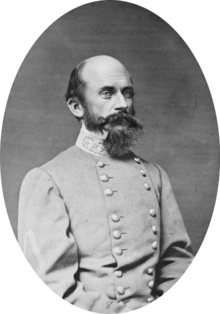
General Richard S. Ewell


HEADQUARTERS ARMY OF NORTHERN VIRGINIA,

           Chambersburg, June 28, 1863, 7.30 a.m.

Lieut. Gen. R. S. EWELL,
            Commanding Corps:

   GENERAL:  I wrote you last night, stating that General Hooker was reported to have crossed the Potomac, and is advancing by way of Middletown, the head of his column being at that point in Frederick County.  I directed you in that letter to move your forces to this point.  If  you have not already progressed on the road, and if you have no good reason against it, I desire you to move in the direction of Gettysburg, via Heidlersburg, where you will have turnpike most of the way, and you can thus join your other divisions to Early's, which is east of the mountains.  When you come to Heidlersburg, you can either move directly on Gettysburg or turn down to Cashtown.  Your trains and heavy artillery you can send, if you think proper, on the road to Chambersburg.  But if the roads which your troops take are good, they had better follow you.*

     R. E. LEE,
          General.

* Noted in letter-book as copied from memory.

Official Records, Series I., Vol. 27, Part 3, Page 944.

Ewell was farthest in advance and, on reports of Hooker crossing the Potomac, had to be called back closer to the main body of Lee's army.  Notice here how many of Lee's instructions are either conditional or permit discretion.

Wednesday, June 26, 2013

June 27, 1863 (Saturday): Hooker Releived

General George Meade


HEADQUARTERS ARMY OF THE POTOMAC,
June 27, 1863
GENERAL-IN-CHIEF AND WAR DEPARTMENT,
Washington:
    General Hooker personally has just left here for Harper's Ferry, where he will be about 11 o'clock, Point of Rocks about 10 a. m., and at Frederick to-night. Copies of all dispatches should be sent to Frederick and Harper's Ferry up to 11 a. m., and after that to Frederick. The staff are just leaving here for Frederick.


     DANL. BUTTERFIELD,
     Major-General, Chief of Staff.

WASHINGTON, D. C., June 27, 1863-10. 30 a. m.
General HOOKER,
Army of the Potomac:
    Major [James C.] Duane and Captain [George H.] Mendell were ordered to your army, and it is presumed that they are en route. I do not know where they now are, unless in your army. Maryland Heights have always been regarded as an important point to be held by us, and much expense and labor incurred in fortifying them. I cannot approve their abandonment, except in case of absolute necessity.


     H. W. HALLECK,
     General-in-Chief.


SANDY HOOK, June 27, 1863
(Received 2. 55 p. m.)
Major-General HALLECK,
General-in-Chief:
    I have received your telegram in regard to Harper's Ferry. I find 10, 000 men here, in condition to take the field. Here they are of no earthly account. They cannot defend a ford of the river, and, as far as Harper's Ferry is concerned, there is nothing of it. As for the fortifications, the work of the troops, they remain when the troops are withdrawn. No enemy will ever take possession of them for them. This is my opinion. All the public property could have been secured to-night, and the troops marched to where they could have been of some service. Now they are but a bait for the rebels, should they return. I beg that this may be presented to the Secretary of War and His Excellency the President.


    JOSEPH HOOKER,
    Major-General.


SANDY HOOK, June 27, 1863-1 p. m.
(Received 3 p. m.)
Major General H. W. HALLECK,
General-in-Chief:
    My original instructions require me to cover Harper's Ferry and Washington. I have now imposed upon me, in addition, an enemy in my front of more than my number. I beg to be understood, respectfully, but firmly, that I am unable to comply with this condition with the means at my disposal, and earnestly request that I may at once be relieved from the position I occupy.


    JOSEPH HOOKER,
 

WASHINGTON, D. C.,
June 27, 1863-8 p. m.
Major-General HOOKER,
Army of the Potomac:
Your application to be relieved from your present command is received. As you were appointed to this command by the President, I have no power to relieve you. Your dispatch has been duly referred for Executive action.
H. W. HALLECK,
General-in-Chief.


HEADQUARTERS OF THE ARMY,
Washington, D. C., June 27, 1863.
Major General GEORGE G. MEADE,
Army of the Potomac:
    GENERAL: You will receive with this the order of the President placing you in command of the Army of the Potomac. Considering the circumstances, no one ever received a more important command; and I cannot doubt that you will fully justify the confidence which the Government has reposed in you. You will not be hampered by any minute instructions from these headquarters. Your army is free to act as you may deem proper under the circumstances as they arise. You will, however, keep in view the important fact that the Army of the Potomac is the covering army of Washington as well as the army of operation against the invading forces of the rebels. You will, therefore, maneuver and fight in such a manner as to cover the capital and also Baltimore, as far as circumstances will admit. Should General Lee move upon either of these places, it is expected that you will either anticipate him or arrive with him so as to give him battle. All forces within the sphere of your operations will be held subject to your orders. Harper's Ferry and its garrison are under your direct orders. You are authorized to remove from command, and to send from your army, any officer or other person you may deem proper, and to appoint to command as you may deem expedient. In fine, general, you are intrusted with all the power and authority which the President, the Secretary of War, or the General-in-Chief can confer on you, and you may rely upon our full support. You will keep me fully informed of all your movements, and the positions of your own troops and those of the enemy, so far as known. I shall always be ready to advise and assist you to the utmost of my ability. Very respectfully, your obedient servant,


    H. W. HALLECK,
    General-in-Chief.

Official Records, Series I., Vol. 27, Part 1, Pages 59-61.

Hooker went to Harper's Ferry to determine whether to withdraw the force there.  In the meantime he was ordered to defend Maryland Heights.  This took 10,000 men (of questionable value to begin with) away from him while still requiring him to leave sufficient force to cover Washington and Baltimore.  Believing his forces too much divided with Lee on the move, Hooker asked to be relieved.  It appears, from contemporary testimony, Lincoln had already decided in the morning to replace him.  Thus the Army of the Potomac changed commanders within within a week of the Battle of Gettysburg.