Wednesday, August 14, 2013

August 14, 1863 (Saturday): Rumors of Raids

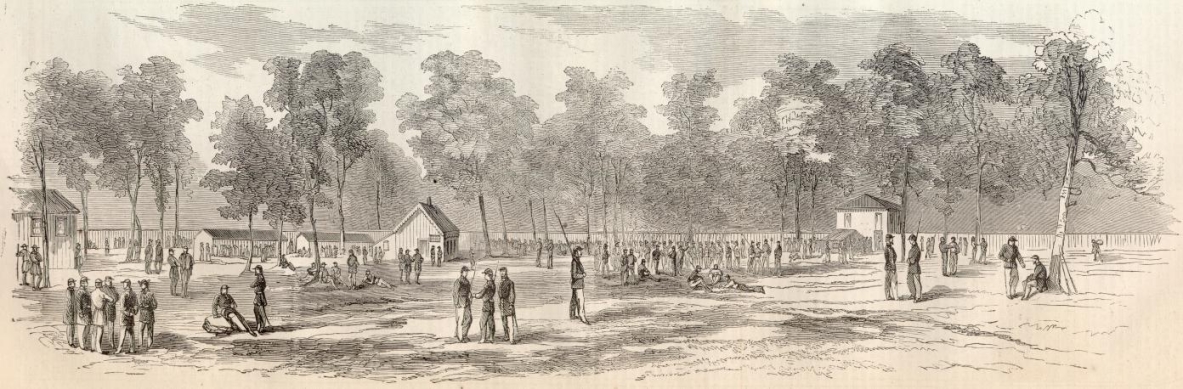
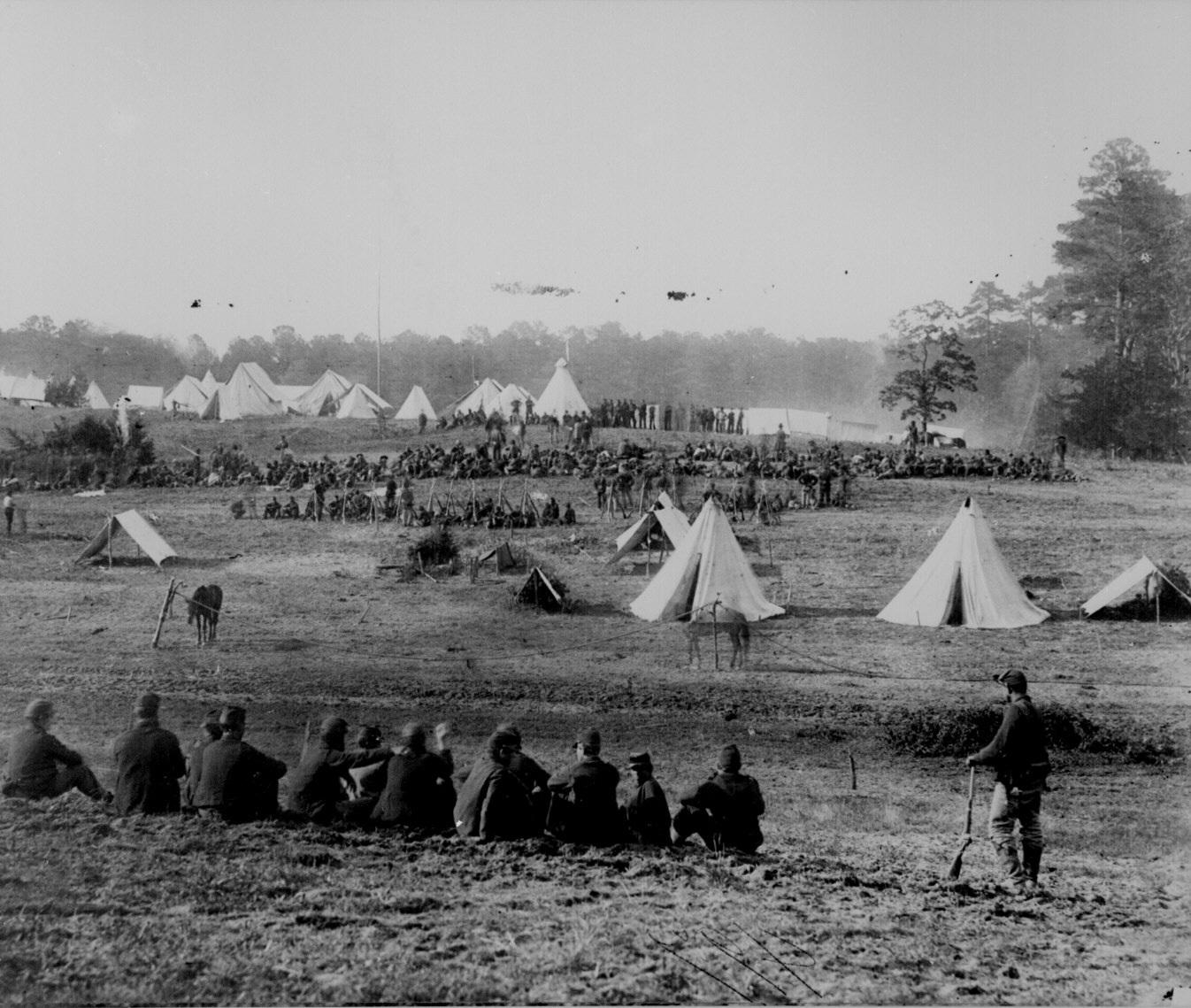
Union Encampment (National Archives)


HEADQUARTERS ARMY OF THE POTOMAC,
August 14, 1863-4. 30 p. m.
Major-General MEADE,
Commanding Army of the Potomac, War Dept., Washington:
     The following report* is sent at the request of Major-General Pleasonton, who urges that it may be sent to General Meade immediately, so "that he may authorize a change in the present disposition of the cavalry as well as other corps. "
This is not the opinion of Major-General Slocum, nor mine, excepting partially in respect to the Cavalry Corps. I can get nothing from Watery Mountain signal officer, although I have directed observations to be made in reference to this report and made repeated inquiries. Will keep you advised.


     A. A. HUMPHREYS,
     Major-General, Chief of Staff.

HEADQUARTERS ARMY OF THE POTOMAC,
August 14, 1863.
Major General GEORGE G. MEADE,
Washington:
     The following copy of a letter just received by me from General Williams is sent as corroboration of the dispatch transmitted 4. 30 p. m.:


FAIRFAX STATION,
August 9, 1863.
    DEAR BROTHER: A rebel raid on a large scale is intended through this section within a week or two. I have this information a way that I consider reliable. It came from an officer in Stuart's cavalry, who, I think, has been stopping at Fairfax Court-House with his wife for some days, and left a day or two ago. It will probably come from Fredericksburg, by way of Dumfries and Occoquan, and strike the railroad at this point, with intention to destroy it to Manassas. Mosby, I think, is gone, as it was getting rather hot for him, but he has gained all the information desired of the positive strength of the forces guarding the railroads. Nothing can be easier than for 5,000 or 6,000 cavalry to sweep around Meade's army and gobble up the small forces along this road, destroy a large amount of stores at the various points, cars, locomotives, &c., and tear up the railroad itself, so as to take weeks to repair it, and compel Meade to detach a large force to defend it. Would it not be best to give General Heintzelman this information?


      JOB HAWXHURST
      HUMPHREYS.

HDQRS. CAVALRY CORPS, ARMY OF THE POTOMAC,
August 14, 1863-7. 15 p. m. (Received 7. 30 p. m.)
Major-General HUMPHREYS,
Chief of Staff:
    GENERAL: Your dispatch of 7 p. m. received. Am I authorized to concentrate all the cavalry not on duty as picket guards? The commands are so scattered that it will take some time to concentrate any portion of them.
     Very respectfully,


     A. PLEASONTON,
     Major-General, Commanding.
 
*Not found.

Official Records Series I., Vol. 29, Part 2, Page 44.

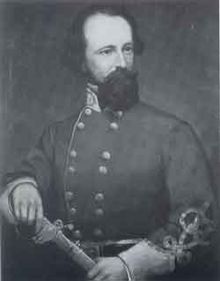
Even though the Union cavalry was rapidly gaining equal footing with its Confederate counterparts  Stuart and his troops were still a factor to be reckoned into the planning of Union officers.  In this instance it is possible, if not probable, there was no more behind the report than speculation.  It was always the goal of Stuart to break up Union lines of communication so such speculation always carried a ring of truth whether any plan was actually underway. 

Monday, August 12, 2013

August 13, 1863 (Friday): A Bounty On A Ship

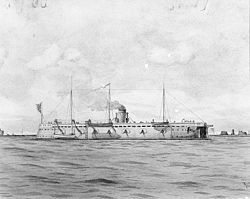
USS New Ironsides

CHARLESTON, August 13, 1863.
[General G. T. BEAUREGARD:]
    MY DEAR SIR: Understanding that several projects are on foot to destroy the Ironsides, I take the liberty of saying to you (should the parties come before you) that I am authorized by my copartners to offer $100,000 for them and myself and any party who will sink or destroy the Ironsides or the Wabash, and $50,000 if one of the monitors is destroyed. It may be of service, this offer, and I take the liberty to write you this note.
    Yours, truly,


    THEODORE D. WAGNER, Of JOHN FRASER & CO.
     CHARLESTON, S. C.

Official Records, Series I., Vol. 28, Part 2, Page 280.

Fraser ran a cotton brokerage in Charleston, his interest in the matter being slanted a great deal toward the financial end of the equation.  The New Ironsides saw extensive combat during the war.  It was a wooden hulled ship covered in iron plating and had both steam and sail power capabilities.  There was one successful attack on the ship by a submersible, the CSS David, but the attack did not cause sufficient damage to take the New Ironsides off the line.  After the war the ship was destroyed in a fire caused by an unlit stove.

Sunday, August 11, 2013

August 12, 1863 (Thursday): Fort Sumter Two Years On

Stereoscopic Image of Interior of Fort Sumter


HDQRS. DEPT. SOUTH CAROLINA, GEORGIA, AND FLORIDA,
Charleston, S. C., August 12, 1863.
Brigadier General R. S. RIPLEY,
Commanding First Military District:
    GENERAL: Five 8-inch naval shell guns were originally ordered from Fort Sumter to Battery Cheves, but one of them was afterward directed to be placed in Battery Haskell, where it is much needed, but is not there as yet, it is said. Please look to this matter.
    The further constructions of all works for defense of Fort Sumter are placed under your charge, a special order to that effect having been issued.
    Will it not be advisable to use barges and boats as much as possible in the transportation of sand-bags from the several points where they are filled? A large of these barges Major Echols has been directed to transfer to quartermaster's department. We must use our means of transportation with the utmost skill and energy, to make it in any way adequate to our wants in the emergency.
    Now that you have the direct charge of the works at Fort Sumter, you can arrange that matter for the accommodation of laborers.
    Respectfully, your obedient servant,


    THOMAS JORDAN,
    Chief of Staff.

Official Records, Series I., Vol. 28, Part 2, Page 225.

Two years and 4 months earlier, Beauregard and Jordan looked out at Fort Sumter for an attacker's perspective.  Twenty-eight months in, Fort Sumter remained a focal point of the war, in some ways standing as defiantly as at war's commencement.

August 11, 1863 (Wednesday): Lee's Resignation Declined


(Lee Statue, Monument Avenue) DGS.Va.Gov.

RICHMOND, VA.,
August 11, 1863.
General R. E. LEE,
Commanding Army of Northern Virginia:
    Yours of 8th instant has been received. I am glad that you concur so entirely with me as to the want of our county in this trying hour, and am happy to add that after the first depression consequent upon our disaster in the west, indication have appeared that our people will exhibit that fortitude which we agree in beliieving is alone needful secure ultimate success.
    It well became Sidney Johnston, when overwhelkmed by a senseless clamor, to admit the rule that success is the test of merit;* and yet there has been nothing which I have found to require a greater effort of patience than to bear the criticisms of the ignorant, who pronounce everything a failure which does not equal their expectations or desires, and can see no good result which is not in the line of their own imaginings. I admit the propriety of your conclusions, that an officer who loses the confidence of his troops should have his position changed, whatever may be his ability, but when I rear the sentence I was not at all prepared for the application you were about to make. Expressions of discontent in the public journals furnish but little evidence of the sentiment of an army. I wish it were otherwise, even though all the abuse of myself should be accepted as the results of honest observation. I say I wish I could feel that the public joblic journals were not generally partisan nor venal.
    Were you capable of stooping to it, you could easily surround yourself with those who would fill the press with your laudations, and seek to exalt you for what you had not done, rather than detract from the achievements which will make you and your army the subject of history and object of the world's admiration for generations to come.
    I am truly sorry to know that you still feel the effects of the illness you suffered last spring, and can readily understand the embarrassments you experience in using the eyes of others, having been so much accustomed to make your own reconnaissances. Practice will, however, do much to relieve that embarrassment, and the minute knowledge of the country which you have acquired will render you less dependent for topographical information.

    But suppose, my dear friend, that I were to admit, with all their implications, the points which you present, where am I to find that new commander who is to possess the greater ability which you believe to be required? I do not doubt the readiness with which you would give way to one who could accomplish all that you have wished, and you will do me the justice to believe that if Providence should kindly offer such a person for our use, I would not hesitate to avail of his services.
    My sight is not sufficiently penetrating to discover such hidden merit, if it exists, and I have but used to you the language of sober earnestness when I have impressed upon you the propriety of avoiding all unnecessary exposure to danger, because I felt our country could not bear to lose you. To ask me to substitute you by some one in my judgment more fit to command, or who would possess more of the confidence oh the army, or of the reflecting men of the country, is to demand an impossibility.
    It only remains for me hope that you will take all possible care of yourself, that your health and strength may be entirely restored, and that the Lord will preserve you for the important duties devolved upon you in the struggle of our suffering country for the independence which we have engaged in war to maintain.
    As ever, very respectfully and truly, yours,


    JEFFERSON DAVIS.

Official Records, Series I., Vol. 29, Part 2, Pages 639-640.

Davis acknowledges the central flaw in Lee's offer to resign.  Where was there one to take his place? 

August 10, 1863 (Tuesday): Anti-War Men In Terre Haute

Camp Morton


PROVOST-MARSHAL'S OFFICE,
Terre Haute, August 10, 1863.
Colonel CONRAD BAKER,
Acting Assistant Provost-Marshal-General:
    SIR: The active movements of the anti-war men in this district have recently caused me to institute inquiry as to their designs, and while I cannot say that I actually believe that they are getting ready to resist the draft, yet there are many circumstances which point strongly in that direction. They hold meetings nearly every day, and the burthen of all their speeches, as reported to me, is denunciation of the conscription laws, &c. In private they swear they will resist, and their orators all unite in counseling them to arm themselves to "defend their rights." They are making extraordinary exertions to procure arms, and an effort was made there to-day to buy fifty sabers and a number of guns by persons belonging to them. Now, it seems to me that something ought to be done to arrest this state of things. Of course I cannot suggest that is best, but I hope you will bring it to the notice of General Willcox, and let him apply the remedy. Would it not be well to suspend the sale of arms entirely until after the draft? It strikes me that it would. At all events, there should be a man assigned especially to the duty of examining all the freight shipped from Indianapolis to see that no arms are sent. They can purchase them there or at Cincinnati. You recollect that I called your attention to some guns purchased a week or so ago for Parke County. I looked out for them and had several detectives at work, yet I understand they got them, and of course they were shipped at Indianapolis. Please call the attention of General W[illcox] to the matter, for it is important. These men must mean something, and the last few days have developed matters which cause me to suspect them very much.
     I have the honor to be, &c.,


      R. W. THOMPSON,
      Provost-Marshal.

Official Records, Series III., Vol. 3, Part 1, Page 661.

The war was prosecuted with general public backing, but in some areas there was more support than others.  The draft of 1863 was unpopular in many quarters and there were fears of small scale insurrections. 

Thursday, August 8, 2013

August 9, 1863 (Monday): Meade Corrects the Record


Major-General PLEASONTON, Chief of Cavalry.
ADDENDA. HEADQUARTERS ARMY OF THE POTOMAC,
August 9, 1863.
   GENERAL: My attention has been called to what purports to be an official dispatch of General R. E. Lee, *commanding Confederate Army, to General S. Cooper, Adjutant and Inspector General, denying the accuracy of my telegram to you of July 14, announcing the result of the cavalry affair at Falling Waters. I have delayed taking any notice of General Lee's report until the return of Brigadier-General Kilpatrick (absent to leave), who commanded the cavalry engaged on the occasion referred to, and on whose report from the field my telegram was based. I now inclose the official report of Brigadier-General Kilpatrick, made after his attention had been called to General Lee's report. You will see that he reiterates and confirms all that my dispatch averred, and proves most conclusively that General Lee has been deceived by his subordinates, or he would never, in the face of the facts now alleged, have made in error in stating that the body of General Pettigrew was left in our hands, although I would not communicate that fact until an officer from the field reported to me he had seen the body. It is now ascertained from the Richmond papers that General Pettigrew, though mortally wounded in the affair, was taken to Winchester, where he subsequently died. The three battle-flags captured on this occasion and sent to Washington belonged to the Fortieth, Forty-seventh, and Fifty-fifth Virginia Regiments(infantry). General Lee will surely acknowledge these were not left in the hands of "stragglers sleeping in barns. "In conclusion, I desire, if it meets with your approval, that this communication, together with General Kilpatrick's report, may be published, that justice may be done to all parties concerned, and the truth of history vindicated.
     Respectfully, yours,


     GEO. G. MEADE,
     Major-General, Commanding.

*Copy, taken from General Lee's letter-book, attached. 

Official Records, Series I., Vol. 27, Part 1, Page 989.

Pettigrew was an accomplished soldier from North Carolina who fought his division well at Gettysburg and participated in Pickett's charge.  In the retreat his units were among the last on the north side of the Potomac at Falling Waters, where he was mortally wounded at close range while directing his troops.  Meade here corrects erroneous information in reports by Lee.


Wednesday, August 7, 2013

August 8, 1863 (Sunday): Lee Offers to Resign

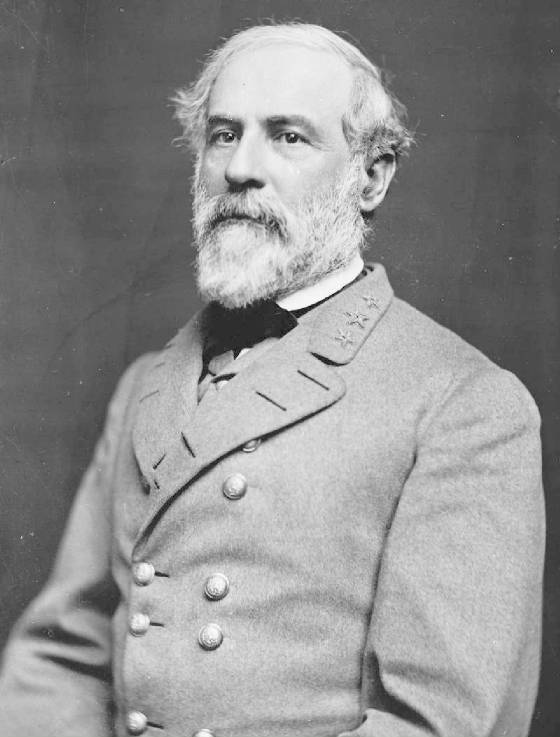
General Robert E. Lee


CAMP ORANGE, August 8, 1863.
His Excellency JEFFERSON DAVIS,
President of the Confederate States:
    Mr. PRESIDENT: Your letters of July 28 and August 2 have been received, and I have waited for a leisure hour to reply, but I fear that will never come. I am extremely obliged to you for the attention given to the wants of this army, and the efforts made to supply them. Our absentees are returning, and I hope the earnest and beautiful appeal made to the country in your proclamation may stir up the virtue of the whole people, and that they may see their duty and perform it. Nothing is wanted but that their fortitude should equal their bravery to insure the success of our cause. We must expect reverses, even defeats. They are sent to teach us wisdom and prudence, to call forth greater energies, and to prevent our falling into greater disasters. Our people have only to be true and united, to bear manfully the misfortunes incident to war, and all will come right in the end.
    I know how prone we are to censure and how ready to blame others for the non-fulfillment of our expectations. This is unbecoming in a generous people, and I grieve to see its expression. The general remedy for the want of success in a military commander is his removal. This is natural, and, in many instances, proper. For, no matter what may be the ability of the officer, if he loses the confidence of his troops disaster must sooner or later ensue.
    I have been prompted by these reflections more than once since my return from Pennsylvania to propose to Your Excellency the propriety of selecting another commander for this army. I have seen and heard of expression of discontent in the public journals at the result of the expedition. I do not know how far this feeling extends in the army. My brother officers have been too kind to report it, and so far the troops have been too generous to exhibit it. It is fair, however, to suppose that it does exist, and success is so necessary to us that nothing should be risked to secure it. I therefore, in all sincerity, request Your Excellency to take measures to supply my place. I do this with the more earnestness because no one is more aware than myself of my inability for the duties of my position. I cannot even accomplish what I myself desire. How can I fulfill the expectations of others? In addition I sensibly feel the growing failure of my bodily strength. I have not yet removed from the attack I experienced the past spring. I am becoming more and more incapable of exertion, and am thus prevented from making the personal examinations and giving the personal supervision to the operations in the field which I feel to be necessary. I am so dull that in making use of the eyes of others I am frequently misled. Everything, therefore, points to the advantages to be derived from a new commander, and I the more anxiously urge the matter upon Your Excellency from my belief that a younger and abler man than myself can readily be attained. I know that he will have as gallant and brave an army as ever existed to second his efforts, and it would be the happiest day of my life to see at its head a worthy leader - one that would accomplish more than I could perform and all that I have wished. I hope Your Excellency will attribute my request to the true reason, the desire to serve my country, and to do all in my power to insure the success of her righteous cause.
     I have no complaints to make of any one but myself. I have received nothing but kindness from those above me, and the most considerate attention from my comrades and companions in arms. To Your Excellency I am specially indebted for uniform kindness and consideration. You have done everything in your power to aid me in the work committed to my charge, without omitting anything to promote the general welfare. I pray that your efforts may at length be crowned with success, and that you may long live to enjoy the thanks of a grateful people.*
     With sentiments of great esteem, I am, very respectfully and truly, yours,


     R. E. LEE,
     General.

*For reply, see VOL. XXIX, Part II, p. 639. 

Official Records, Series I., Vol. 52, Part 1, Page 753.

Lee's health had been declining and the strains of command were weighing heavily upon him.  He should have been, and likely was, aware of the esteem in which he was held by his troops.  But he seems to have fallen into a sort of melancholy.  Who he believed the younger and more able commander was can only be conjectured.  As Davis knew, no such potential commander existed.